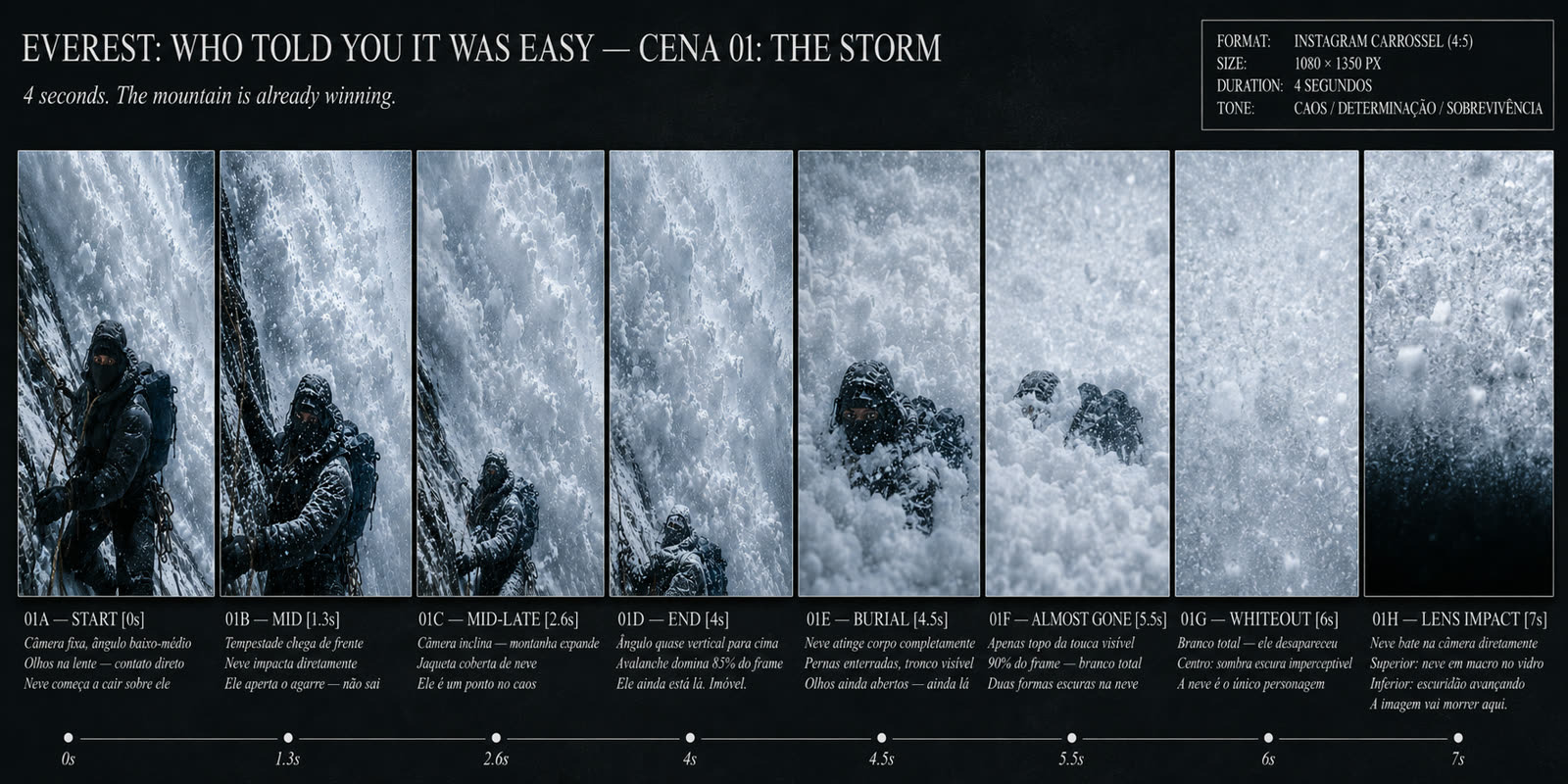
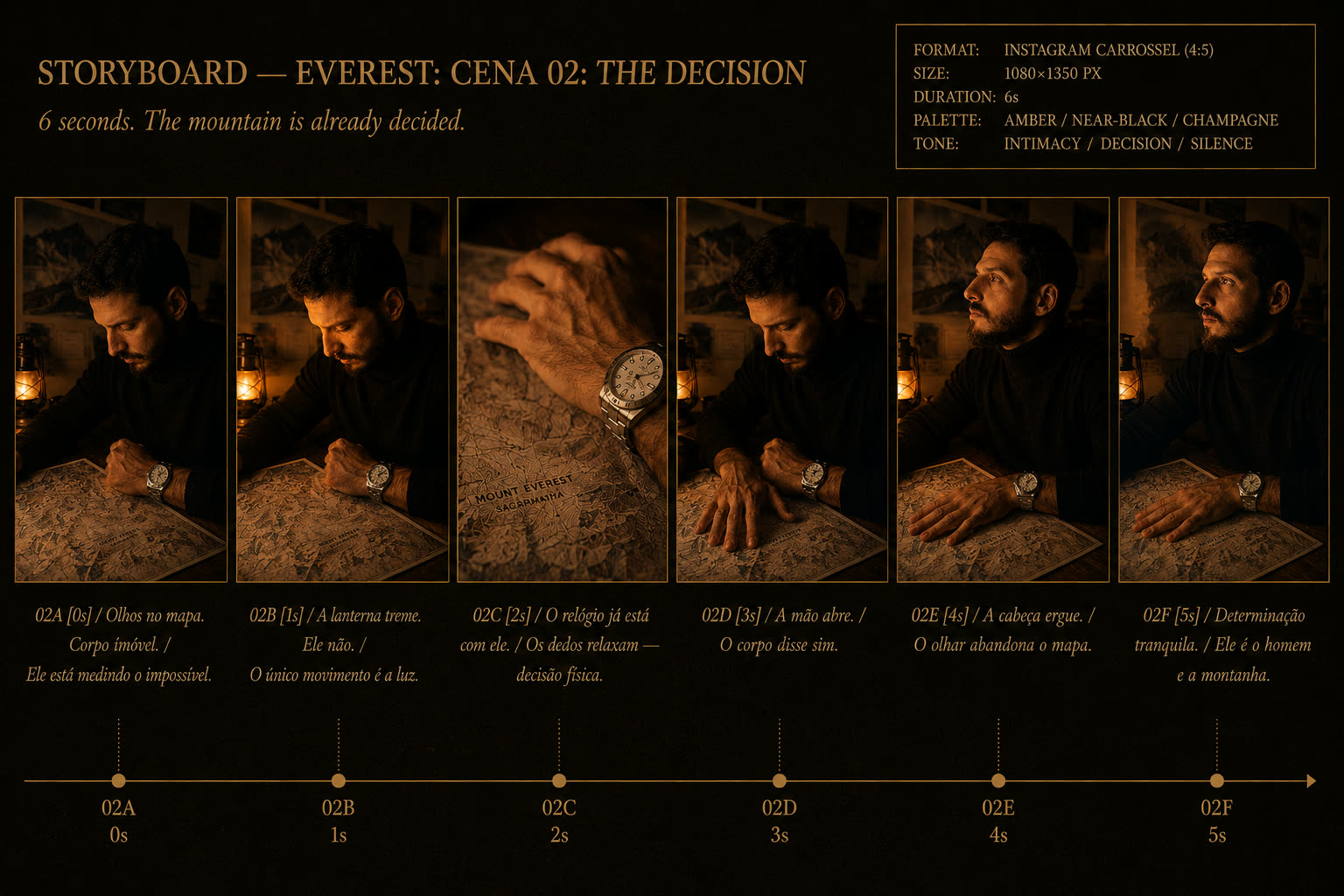
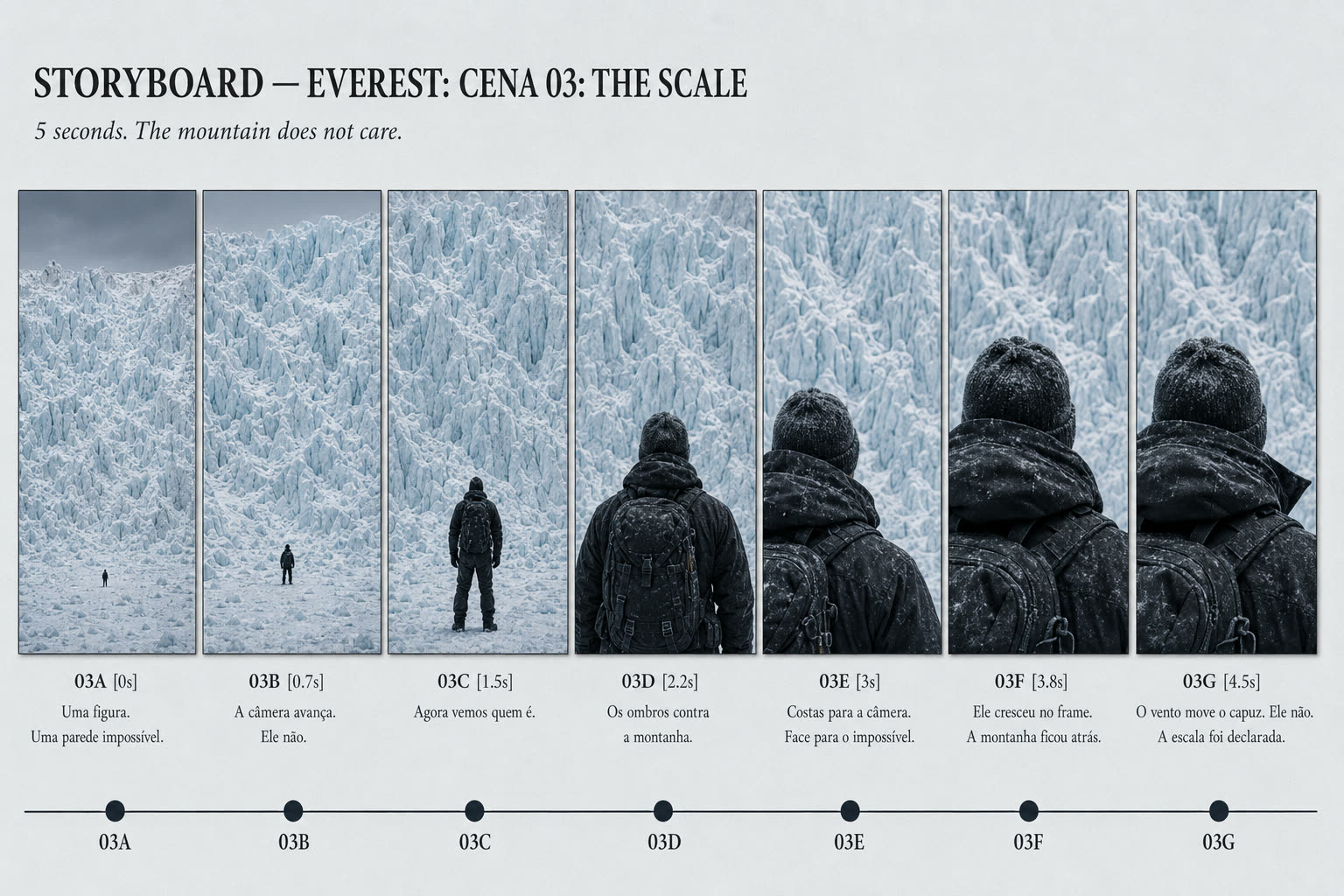
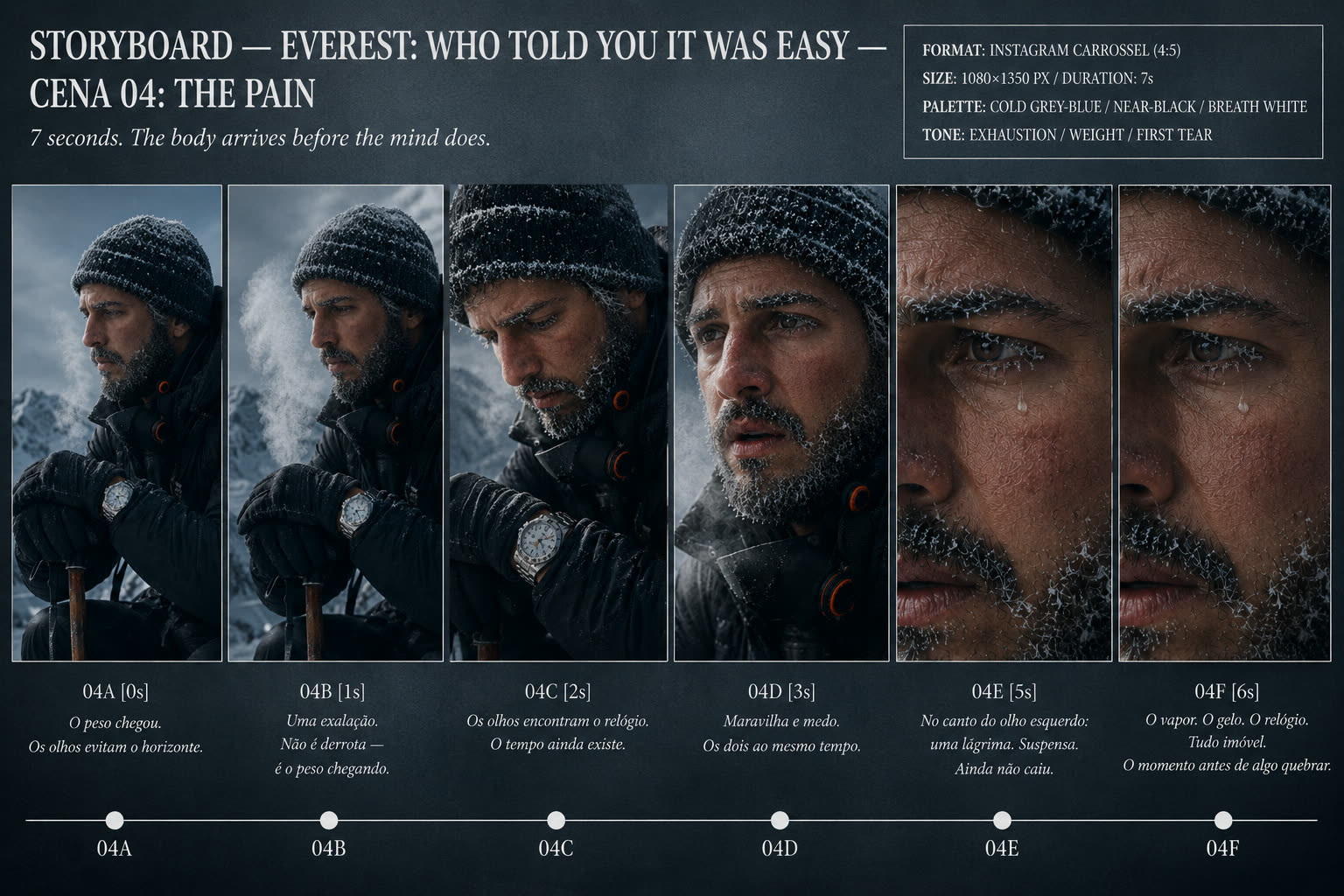
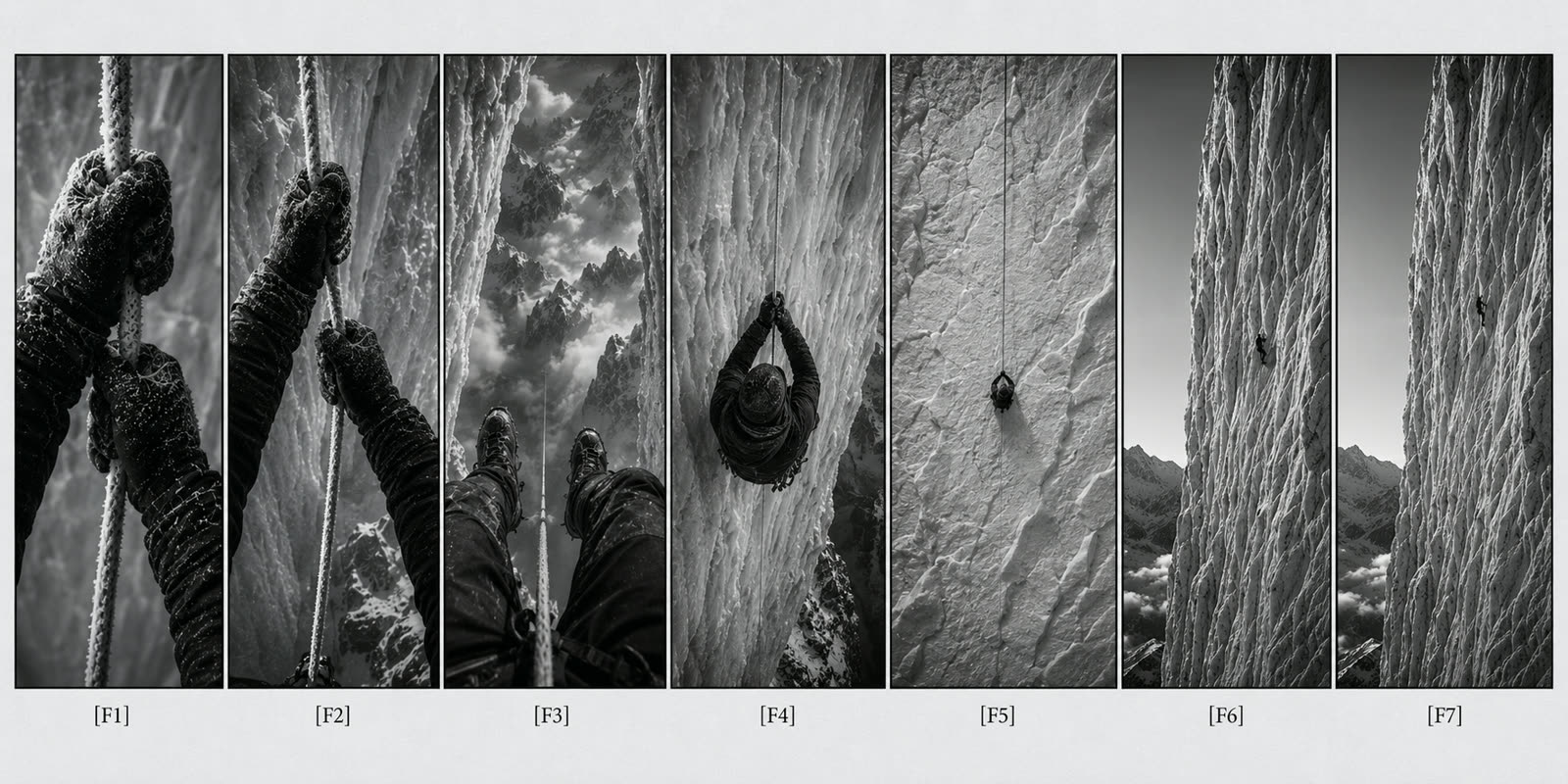
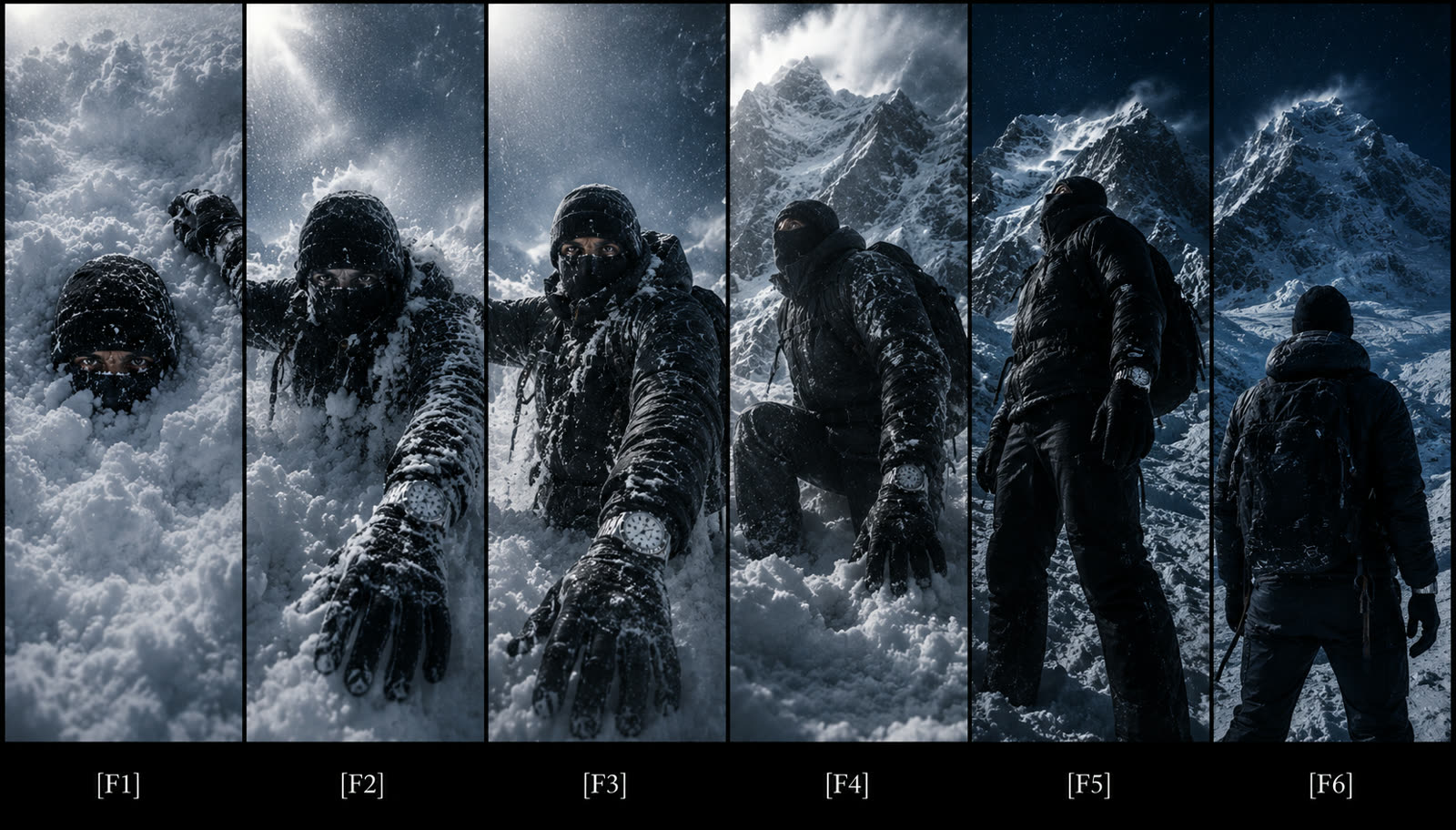
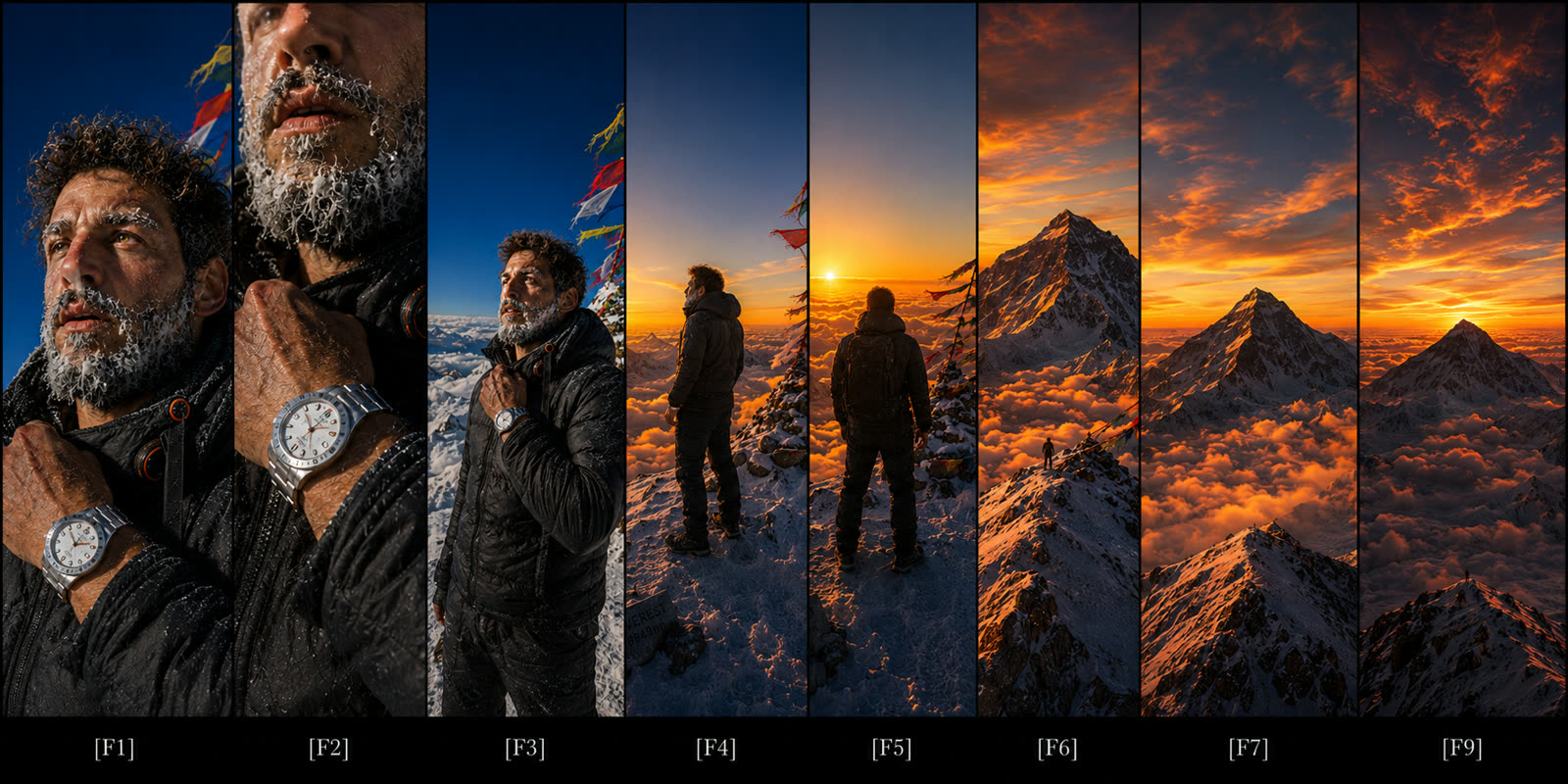
Who told you it was easy? EVEREST began as a single provocation and became an eight-scene ascent, a climb staged frame by frame, where every shot had to earn the next.
Before a single image was generated, the whole piece was storyboarded scene by scene: camera, light, and emotion mapped in advance. Identity locks and continuity filters kept the climber the same person from base to summit.
The boards below are the blueprint the film was built on.
§ Direction notesEmotion is physiology, not a label.
A climber standing in front of an ice wall came back lifeless. So we stopped describing feelings and started directing the body. Not he is determined. Instead: the ice axe wrenched free, the shoulder jolting up five centimeters on impact, then the will pressing it back down. A jaw muscle visible under the skin, a single tear held at the corner of the eye, breath at a one to three ratio. That is the difference between AI content and AI cinema.
One watch, nine scenes.
To hold the climb together, the climber carries a single object across the whole journey: one watch. The decision in amber light. The pain on the ice. The grip over the drop. Proof of life in the dark of the collapse. The summit at sunrise. One object, the same story, from base to peak.
We wrote the film in another language.
We found the model read direction more faithfully in Mandarin, so that is how the film was written, with the camera explicitly locked and every movement declared. Undeclared movement becomes chaos. Amplitude was measured, degree by degree, beat by beat. Control, not luck.